

The Abuse No One Talks About: “He Withheld Sex and Made Me Feel Disgusting for Wanting It”
Withholding physical intimacy as a tool of control.

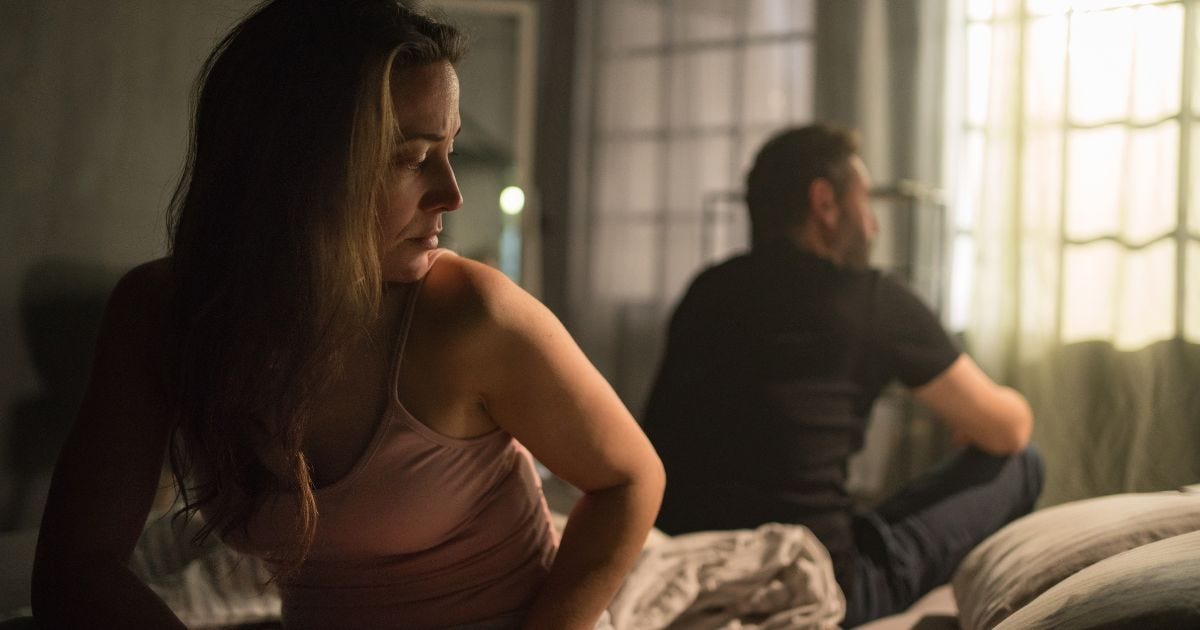
Some domestic abuse survivors describe a form of harm that looks nothing like what most people expect. There was no sexual coercion or aggression. Instead, their partner withdrew all physical intimacy and then made them feel disgusting for wanting it all.
Sexual withholding as a means of control is rarely spoken about, and abusers rely on that silence. When it is used repeatedly to punish, shame, degrade, or control it is not a relationship problem. It is abuse.
A Less Visible Form of Sexual Abuse
Sexual coercion and assault within intimate partnerships are well-documented, serious, and devastating, and they are far from rare. Focusing only on sexual aggression, however, leaves a significant gap in our understanding, one that abusers exploit. Some abusers use sex as a weapon by forcing it. Others use it by withholding it, while ensuring their partner feels broken, ugly, and ashamed for having needs at all.
Coercive control, as described by renowned sociologist Evan Stark (2007), is a pattern of behaviour through which an abuser strips their partner of autonomy, identity, and sense of reality. Sex, or the deliberate withdrawal of it, is one tool among many in that pattern. An abuser who understands that physical closeness matters to their partner has already identified a pressure point, and the withdrawal of intimacy becomes something they can deploy strategically.
“He Called Me a Nympho”
One survivor described the gradual erosion of physical affection in her marriage this way:
“In the last few years of our union, he stopped touching me. No cuddles, no hugs, no kisses, no sex. He went to bed every night and turned his back on me. He called me a ‘nympho,’ whereas I was just a healthy woman in her 20s and early 30s. I was basically left in every way but name, and his assorted demands on my attention. The marriage was finally where he wanted it: me as his mommy and provider. Any argument resulted in bitter quarrelling, during which he compounded how ‘repulsive’ I was. Yet he continued to boast about me/us, and to accuse me of infidelity.”
This account contains almost every hallmark of this abuse pattern. The abuser withdrew all physical warmth, turned her own needs into a source of shame, maintained a performance of devotion in public, and ran a private campaign of degradation. She was simultaneously too much and not enough, a “nympho” to him behind closed doors and a trophy wife to everyone else. Those contradictions were the mechanism of control. They keep you off balance, never sure who you are, or how you are seen.
Another survivor described a similar dynamic:
“He hadn’t touched me in over a year, but if I ever brought it up, he told me I was ‘obsessed with sex’ and ‘embarrassing.’ He’d look at me like I was disgusting for even wanting to be close to him. I started to believe there was something wrong with me.”
That internalisation, the belief that something is fundamentally wrong with you, is precisely what the abuser is working toward.
Shame as a Control Strategy
When an abuser labels a partner a “slut,” “nympho,” or “whore” for wanting physical intimacy within their own relationship, they are reframing a normal human need as a character flaw. This reframing is deliberate and it does several things at once.
It isolates. A partner who has been made to feel their desires are shameful is unlikely to confide in friends or family, because shame makes it harder to speak, seek support, or name what is happening. Who wants to admit they’ve been called a nymphomaniac by the person who is supposed to love them?
It destabilises. Healthy adults wanting physical closeness with a partner is part of normal human desire for connection. When an abuser repeatedly denies and distorts that, you begin to question your own perceptions and needs. This is a form of gaslighting that operates specifically in the domain of the body and desire.
A partner who has learned that raising the subject of intimacy will trigger humiliation or a fight will eventually stop raising it, which is exactly what the abuser wants.
“Every time I tried to talk about how disconnected I felt, he’d throw it back at me, that I was needy, that I was suffocating him, that normal women didn’t carry on like this,” one survivor recalled. “I spent years apologising for wanting my own husband to hold my hand.”
Criticising Your Body and Sexual Performance
Some abusers go further than withdrawing. They offer a false explanation for it, and that explanation is designed to wound as deeply as possible. Survivors frequently describe partners who pointed to their physical appearance or their body as the reason for the rejection, making cruel comments about their genitals, their scent, or their shape. Others were told they were bad in bed, that their performance was the problem, that they didn’t measure up, and that no one would want them.
“He told me early in our relationship that I smelled ‘off’ down there. I was mortified. I went to the doctor and there was nothing wrong with me. But I never forgot it. Years later, when he stopped wanting to be intimate, he brought it up again. It was like he’d been saving it,” one survivor said.
This tactic is particularly cruel because it targets an area where most people are already vulnerable. Sexual confidence is fragile, and a partner who is told repeatedly that their body is ugly, strange, or unclean, or that they are not good enough in bed, will carry that wound long after the relationship has ended.
“He used to rank me. Literally tell me I was maybe a five out of ten on a good day, and that I should be grateful he’d been with me at all. He said I was ‘wooden’ in bed and that’s why he’d lost interest. I didn’t date anyone for four years after I left because I was so convinced no one would want me.”
Another survivor shared:
“He told me he was bored of having sex with me because it was like f**king a starfish. It’s the most humiliated and embarrassed I have ever felt. I was so ashamed and felt like I wasn’t measuring up to his expectations.”
The abuser’s goal in making these comments is damage to self-worth. A partner who has been made to feel fundamentally undesirable is less likely to leave, less likely to seek connection elsewhere, and less likely to trust their own perception of events when they begin to recognise what has been done to them.
Knowing Exactly Where it Hurts
Coercive control research consistently shows that abusers personalise their tactics. They pay close attention to what their partner values, fears, and needs, and then they systematically attack it. For a partner who places high value on physical intimacy and emotional closeness, the withdrawal of touch becomes a deliberate punishment.
“He knew I was a touchy-feely kind of person. I’d told him early on how important physical affection was to me, that it was how I felt loved,” said one survivor. “Years later, when he wanted to hurt me, that was exactly what he took away. And when I reacted, when I cried, or got angry, or begged him to just hold me, he used that reaction as proof that I was unstable.”
The abuser inflicts the pain and then uses the pain response as evidence against their partner. The withdrawal causes distress, and the distress becomes ammunition. It is a trap that closes from both directions.
Recognising the Harm
Sexual withholding combined with shame, humiliation, and bodily degradation is abuse. It produces measurable psychological harm, including depression, anxiety, attachment difficulties, and a deep erosion of self-worth that can persist for years after leaving. Survivors frequently describe this as the hardest part of their experience to name, because it is so embarrassing to talk about, and bears no resemblance to what they’d been told abuse is.
If your partner made you feel disgusting for wanting closeness, told you your body was wrong, your desire was shameful, or your performance was inadequate, that was a deliberate strategy of control and it was never your fault.
You were not the problem. The abuser was, and their strategy depended on you never seeing that clearly.
* Quotes are drawn from survivor experiences shared publicly on the Shadows of Control Facebook and Twitter pages and have been lightly edited for spelling, grammar, or clarity.
You might also like:
Emotional Withholding: How Abusers Use Affection as a Weapon

Abusers use many tactics to maintain control, and emotional withholding is among the most damaging. It involves deliberately removing warmth, closeness, and care to keep a partner confused, compliant, and focused on restoring the relationship. The abuser decides when connection is available and when it isn’t, and that decision is always tied to whether …
I've rarely heard of withholding as an abuse tactic, but that's exactly what it was. For two years after he moved out of our bedroom, he refused to discuss it, telling me, "You won't like what you hear." Then, inexplicably he brought it up while I was driving through Washington DC during morning commute, in a monsoon, through a construction zone with multiple detours. He said he could not achieve "gratification" through sex with me because "your stomach sticks out more than your tits." (This was after surgery for breast cancer.). The timing, the wording, the "reason" -- all chosen for maximum cruelty. I wanted to make love with my husband, he made it clear he didn't love me, and wasn't attracted to me. He's an ex-husband now.
Mine would fall asleep on the sofa for days and days on end. I said many times I didn’t like ending or starting the day alone. If I ever cried, explained how rejected I felt, or asked him to come to bed at the same time as me, he’d get really cold. Apparently he had promised himself he wouldn’t react when I was like that.