

When Basic Needs Become Tools of Control
How restricting food, sleep, heating, money, transport, and medical care becomes a tactic of coercive control.

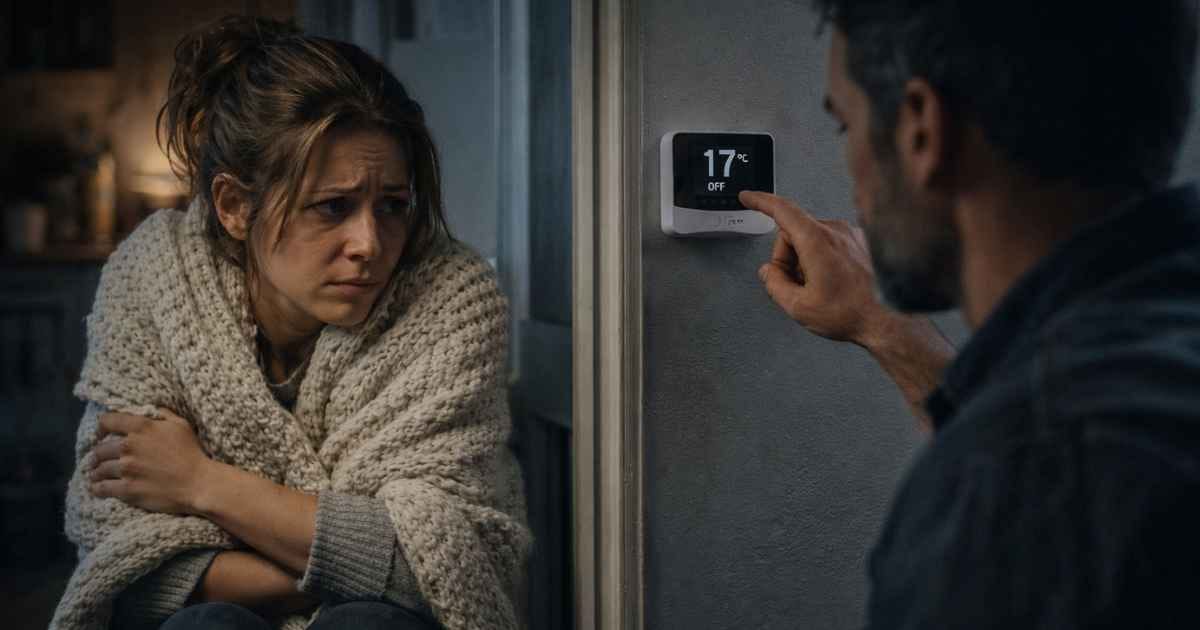
Coercive control describes a pattern of behaviour used to dominate and restrict another person’s life. It unfolds through many everyday decisions that gradually narrow a partner’s independence until their choices, movements, and even basic comfort are shaped by someone else’s authority. Physical violence may or may not be present. In many relationships the control operates through restrictions, pressure, and the steady management of daily life.
One of the most disturbing aspects of coercive control is the deliberate restriction of basic human needs. Some abusers control access to food, sleep, heating, transport, medical care, or money. These are the conditions that allow a person to function, care for themselves, and participate in ordinary life. When an abusive partner begins controlling these things, the balance of power shifts dramatically.
Daily life becomes something that must be negotiated or earned. Warmth, rest, meals, healthcare, and mobility start to depend on the approval of the person who is exerting control.
Many survivors speak about the experience as a gradual shrinking of freedom. What begins as small limitations eventually reaches the point where even the most ordinary parts of living are regulated by the abusive partner.
Food as a Tool of Control
Food is one of the most common needs used as leverage in abusive relationships. Some abusers monitor what their partner eats, criticise the quantity, or create rules about when meals are allowed. Others restrict grocery spending, keep certain foods locked away, or punish their partner for eating outside of what has been permitted.
The effect is not limited to hunger. Eating becomes something that must be justified, negotiated, or hidden. Survivors often recall a constant awareness that even basic nourishment could lead to criticism, humiliation, or punishment.
“He watched everything I ate. If I took more than he thought I should, he would tell me I was greedy and didn’t deserve dinner.”
“There were days I lived on crackers and water because it was easier than dealing with the fight that came with eating.”
In some households, food was also tied directly to compliance.
“If I had upset him earlier in the day, dinner would disappear. He would say I had lost the right to eat.”
Food, which should be a simple part of daily life, becomes a mechanism for discipline and control.
Controlling Heating and Basic Utilities
Heating, electricity, and hot water may also be controlled as part of coercive control. These essentials shape the conditions in which a person lives, rests, and recovers. When an abusive partner manages these resources, they are managing comfort and safety inside the home.
Survivors describe living in houses where warmth depended on the mood of the person controlling the thermostat.
“He would spend money on whatever he wanted, then say the heating bills were too high. The thermostat stayed off when he was out working, so I spent entire days sitting in a freezing apartment.”
“If I had argued with him earlier, the heat stayed off that night. I learned quickly that comfort depended on keeping him happy.”
Some survivors endured prolonged exposure to cold homes.
“We slept in coats and blankets because the heating was locked. He said I needed to prove I deserved it.”
Living in these conditions reinforces the message that comfort, warmth, and physical security belong to the person holding the power.
Financial Deprivation and Control of Money
Financial control is one of the most powerful tools within coercive control because it places the practical parts of daily life under the authority of the abusive partner.
Some abusers prevent their partner from working, monitor every purchase, or demand full transparency about spending. Others provide a small allowance that barely covers essential costs.
Survivors frequently share situations where money was technically available but inaccessible to them.
“My ex controlled every bank account. I had to ask for money for groceries, and sometimes he would refuse just to prove he could.”
“He was a multimillionaire but gave me a fixed amount for food each month and said I needed to make it stretch.”
In other households, the deprivation became severe.
“By the end I was going to food banks because he had taken so much of the money. I skipped meals so the kids could eat properly.”
Financial restriction places everyday survival under the authority of the abusive partner.
Control of Transport and Movement
Some abusive partners maintain control by limiting access to transport, ensuring that movement outside the home depends on their permission.
This may involve removing car keys, refusing to allow the victim to drive, or relocating to places where transport is limited. In some cases the control escalates further, with the abusive partner deliberately damaging the car. Survivors report tyres being slashed, parts of the car being sabotaged, or the vehicle being intentionally crashed so that it becomes unusable.
Many survivors reflect on the impact this has on daily life.
“He moved us to a rural area where the nearest store was miles away. Then he said we could only afford one car and he took it to work.”
“I had to ask permission to use the car. Most of the time the answer was no.”
Appointments and commitments often became impossible to keep.
“He would promise to drive me somewhere important, then cancel just before we were supposed to leave. After a while I stopped arranging anything.”
Without reliable transport, contact with the outside world becomes increasingly restricted.
Sleep Deprivation as a Method of Control
Sleep is another area where control can be imposed. Some abusers create constant interruptions during the night, initiate arguments when their partner is trying to sleep, or structure the household in ways that prevent proper rest.
For many survivors this becomes an ongoing feature of daily life.
“There was sleep deprivation on a huge scale. I worked all night and cared for the children all day. I slept about one hour a night for years.”
“He would wake me up to continue arguments that started earlier. If I tried to sleep he said I was ignoring him.”
Some survivors noted that rest was granted or withheld according to the abuser’s decisions.
“On Saturdays he sometimes allowed me to sleep a few hours longer. It was presented as a reward.”
Sleep, which should be automatic and protected, is treated as a privilege that must be earned.
Blocking Access to Medical Care
Medical care is another need that may be controlled in abusive relationships. Some abusers ignore health concerns, discourage medical visits, or actively prevent their partner from seeking treatment. Survivors recount situations where injuries or illnesses were dismissed or minimised.
“I had to drive myself to the hospital and got a botched emergency c-section re-stitched with only a local, so that I could drive myself back to our son.”
Others report medical visits being blocked entirely.
“He said doctors would ask too many questions, so he would not allow me to go.”
Another survivor spoke about being pressured to ignore serious symptoms.
“He said I was exaggerating and wasting money. I stopped mentioning it after that.”
When access to healthcare is restricted, a person’s wellbeing becomes dependent on the approval of the abusive partner.
Why Deprivation Strengthens Control
Deprivation strengthens control because it interferes with the conditions people rely on to manage daily life. When access to food, sleep, heating, medical care, transport, or money becomes uncertain, everyday stability disappears.
Survivors often reflect on how this environment reshaped their routines and decisions. They had to negotiate for meals, ask permission for heating, get approval for medical care, and beg for sleep. Movement outside the home relied on access to transport that could be withdrawn at any time.
At the same time these forms of abuse can be difficult for outsiders to recognise. Weight loss, exhaustion, illness, or isolation may appear as personal struggles rather than deliberate control imposed by someone else.
Inside the relationship, however, the pattern becomes clear. The same person controls the food, the heating, the money, the car, the sleep, and the access to care. The partner who is supposed to be sharing life with you is instead managing the conditions under which you are allowed to live it.
Seen together, these restrictions reveal something important. They show that coercive control is not only about arguments, intimidation, or emotional pressure. It is also about regulating another person’s access to the basic things that allow them to function as an independent human being.
* Quotes are drawn from survivor experiences shared publicly on the Shadows of Control Facebook and Twitter pages and have been lightly edited for spelling, grammar, or clarity.
Related article:
I still struggle with eating after being free of him for a year and a half. He expected me to eat only what he wrote on the fridge as "food to use up" and if I ate something else when he wasn't around, I would absolutely hear about it. There was a list on the fridge of his approved groceries to buy. One time I went shopping and bought some things not on the list and he didn't speak to me for 3 weeks. If he ever saw anything in the cupboards not from his list I would hear about it- even months later, he would never let anything go about that, ever. I don't want to cook, eat, or shop now at all, I make myself do it to survive but I can't take any joy from any of it.
Ah golly, my ex used to call me a black hole because I had an appetite. He would get genuinely pissed off if I ate what we were sharing too quickly. Then he would eat it all quickly without me seeing.
The story about moving into the country made me so sad. That’s so horrible.