

Standing Against Gendered Violence plus an Offer for 16 Days of Activism

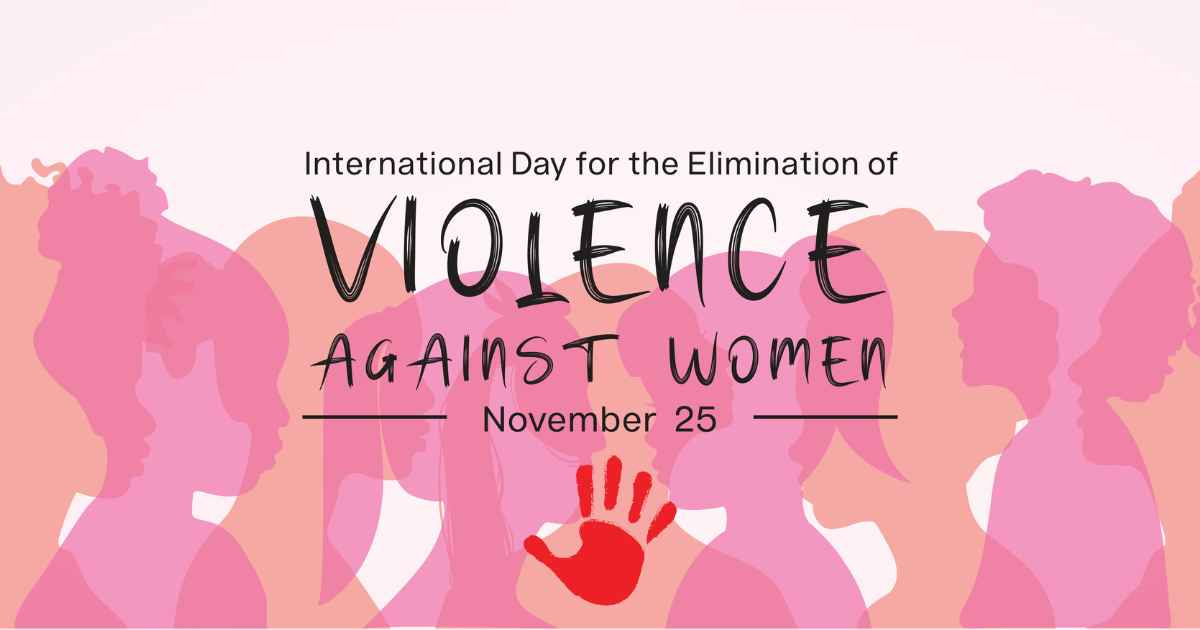
Tomorrow marks White Ribbon Day, the International Day for the Elimination of Violence Against Women and Girls. It also marks the beginning of the annual 16 days of activism, a global campaign dedicated to raising awareness and demanding meaningful change.
In honour of this, and in support of survivors who rely on this space, I am offering 30% off monthly and annual Supporter subscriptions for the next 16 days. Anyone who joins within this period will keep the reduced rate for a full twelve months. This is my way of making the Supporter tier more accessible during a time when we are collectively shining a light on the realities of gendered abuse. If you prefer to remain a free subscriber, you will always be welcome here.
Violence against women and girls is not an occasional incident or a private matter. It is a global crisis, persistent and far reaching. Behind every statistic are real women, real children, and real lives reshaped by fear, control, and harm.
The Scale of the Crisis
The World Health Organization estimates that 1 in 3 women worldwide will experience physical or sexual violence in their lifetime, most often by a current or former partner. In the United Kingdom, a woman is killed by a man every 3 days. In the United States, a woman is killed by a current or former male partner roughly every 6 hours. Globally, the United Nations reports that a woman or girl is killed by someone within her own family every 11 minutes. These numbers have remained alarmingly consistent over time.
Police recorded domestic abuse offences in England and Wales have nearly doubled in the last decade. Organisations such as Refuge and Women’s Aid continue to report high volumes of calls, online messages, and urgent accommodation requests across 2023 and 2024.
In countries where coercive control laws exist, offenders are overwhelmingly male. In Ireland, where coercive control has been a standalone offence since 2018, 100% of those convicted to date are men. In the UK, 97% of convicted offenders are men. These figures are not anomalies. They reflect a consistent, gendered pattern that crosses borders and cultures.
Why Violence Is Gendered
Many people ask why discussions of abuse focus so heavily on women. The answer lies in the evidence. The gendered nature of violence is not an ideological belief. It is documented across decades of research, survivor testimony, policing data, and global public health findings.
Evan Stark, the leading scholar behind coercive control theory and author of Coercive Control: How Men Entrap Women in Personal Life, argues that intimate partner abuse is best understood as a pattern of domination that reflects wider gender inequality.
“Men and women are unequal in battering not because they are unequal in their capacities for violence but because sexual discrimination allows men privileged access to the material and social resources needed to gain advantage in power struggles.” (Stark, 2007)
Stark describes coercive control as a liberty crime. It is about social and political inequality playing out in the most private spaces, where women are disproportionately the targets. He emphasises that the tactics used by abusers reflect wider gendered expectations, noting that coercive control is rooted in “the historic subordination of women in personal life.”
Jess Hill, strengthens this analysis in her book See What You Made Me Do, showing how male entitlement, gendered socialisation, and structural power shape patterns of violence across cultures. Hill’s work reinforces what front line professionals have observed for decades. The majority of severe, controlling, and lethal violence is committed by men against women.
This does not mean men cannot be victims. They can. Some of my own readers and subscribers are male survivors whose experiences are real and important. Supporting survivors means acknowledging each individual’s experience while still naming the overwhelming pattern: women disproportionately face severe, sustained, and lethal violence at the hands of men.
Why Days Like This Matter
Awareness campaigns can feel symbolic, yet their impact is real. These moments force societies to confront truths that are often ignored. They remind us that violence against women and girls is not inevitable, private, or insignificant. They highlight the structures that enable abuse and invite collective responsibility for challenging them.
White Ribbon Day calls on men and boys to actively reject harmful norms, to question beliefs that excuse dominance, and to become part of the solution rather than silent bystanders.
A More Accessible Supporter Space
During these 16 days of activism, I am making the Supporter tier more accessible with 30% percent off monthly and annual subscriptions for anyone who joins during this period. The reduced rate will remain active on your account for a full 12 months. Supporters help sustain in depth articles, resources, survivor guidance, and the ability to keep most content free for anyone who needs it.
If this is the right time for you to join, the offer is available throughout the 16 days. And if you prefer to remain a free subscriber, you are just as valued here. Your presence, your healing, and your voice matter in this community.
Thank you for being here, for reading, for learning, and for walking this path with others who understand. Together we make sure that no survivor walks alone.